
Phase II is now closed. Results will be announced in March.

2026 Tools Competition

Building Pathways to
Postsecondary Success

Phase II is now closed. Results will be announced in March.

traingle logo

Learn About the Track

Track Description

Tools that advance postsecondary learning and workforce development outcomes, expanding pathways to meaningful careers. This track seeks solutions that make postsecondary education more accessible, relevant, and effective, particularly for learners attending community colleges and broad access institutions. It supports tools that bridge education and employment, foster personal and professional growth, and help learners develop the skills, networks, and support they need to succeed in both learning and work.

Whether supporting students entering college, returning as adult learners, or transitioning into high-demand fields, proposed tools should meet the evolving needs of today’s learners and help them identify and navigate clear, affordable pathways to economic mobility.

Competitors may propose solutions that, for example:

Proposals focused primarily on single-subject content or stand-alone courseware will not be competitive unless they demonstrate clear innovation in advancing accessibility, employability, or system-level outcomes.

Strong proposals will demonstrate a commitment to learning engineering, using data to personalize experiences, guide interventions, and generate insights that drive outcomes across diverse postsecondary and workforce settings.

Target Audience

Priority will be given to tools designed for use in broad access higher education institutions or in workforce settings, though applications from other postsecondary environments may also be considered.

Broad access institutions, including community colleges, vocational technical schools, regional public universities, and other colleges with open or less selective admissions, enroll the majority of U.S. post-secondary students. Their students are often working or raising families, are the first in their families to attend college, and have limited financial resources. These institutions play a critical role in supporting student access, persistence, completion, and economic mobility.

Who should submit?

This track is open to teams based in the United States (see the official rules for any additional restrictions). We welcome proposals from teams or individuals from all backgrounds, including edtech companies, researchers/ universities, educators, or students (undergraduate or graduate).

Examples

While the Tools Competition has different tracks and priorities from year to year, the past winning tools below are examples of what could be competitive.

Meet the Judges

Tools Competition judges play a critical role in selecting Tools Competition Winners and bring expertise spanning philanthropy, research, industry, and education. Judges will hear virtual pitches from finalists in Phase III of the competition.

Haifa Badi Uz Zaman

Manager, AI Partnerships
The Rockefeller Foundation

Torie Bates

EdTech Innovation Program Manager
Google.org

Marisa Bold

VP of Sustainable Growth & District Development
Calbright College

Christopher Capozzola

Senior Associate Dean for Open Learning
Massachusetts Institute of Technology

James Glapa-Grossklag

Dean, Educational Technology, Learning Resources and Online Learning
College of the Canyons

Amy Guterman

Senior Director, AI for Impact
Salesforce
Lydia Logan

VP, Global Education and Workforce Development
IBM

Caitlin Mills

Assistant Professor
University of Minnesota

Carlos Monje Jr.

Managing Director and Head of the PolicyCenter
JPMorganChase

Laura Pinnie

Managing Director
Leeds Illuminate

Carol Rava

Vice President - Education Grantmaking
Ascendium

Pavani Reddy

Senior Program Officer
Gates Foundation

Philipp Schmidt

VP Technology Innovation
Axim Collaborative

Compete in this Track

Select your prize level

When submitting a proposal, competitors must select the relevant prize level based on the size and scale of their tool. Proposals at all prize levels should detail how the proposed tool will solve a defined problem, rather than focus on past achievements.

catalyst

Catalyst Level Prizes: $50,000

For early-stage ideas and tools that show strong potential but are not yet widely adopted.

growth

Growth Level Prizes: $150,000

For tools with traction that are ready to expand their reach.

transform

Transform Level Prizes : $300,000

For established platforms with more than 10,000 users that are poised to drive large-scale change.

traingle logo

Proposals will be evaluated for the following criteria


1

Novelty of the tool
and technology


2

Potential impact and likelihood to
improve learning


3

Attention to equity to support learning of historically marginalized populations


4

Demand from learners, families, and educators


5

Ability to support
learning engineering


6

Ability to scale to additional users and/or domains

left-bottom-vector
traingle logo

What is a Tool?

The Tools Competition funds edtech tools and technologies that support learning outcomes and can contribute to learning science research.

Eligible tools have the potential to generate novel learning data that researchers can study to better understand learning at scale. This may include an app, software, algorithm, dataset, or other digital technology that facilitates or supports continuous data collection and has the potential to scale at minimal cost.

Please note that this definition is not exhaustive. As technology continues to develop and innovations are created globally, other tool concepts may also be competitive.

Not sure your tool is eligible? Explore winning tools from previous years.

Timeline

Timeline

September 8, 2025
Competition Launch
October 15, 2025
Deadline for Phase I Abstracts

Competitors submit an abstract describing the concept for their tool.

November 20, 2025
Select competitors invited to Phase II
January 21, 2026
Deadline for Phase II Proposals

Competitors develop a proposal and budget detailing their tool, its methodology, and evaluation metrics.

March 2026
Finalists invited to Phase III pitches
April 2026
Phase III Pitches (virtual)

Finalists pitch before a panel of expert judges.

Late April 2026
Winners Notified
June 2026
Public Announcement

Winners are announced and receive the first installment of their prize. 

Year Following the Competition - Winner Impact Study

Winners track impact metrics in the year following their prize and receive guidance to set up internal evaluation processes.

Fall 2026
Product Review Day

Winners present on their progress to date and receive feedback from other winners and leaders in the field. 

traingle logo

Explore a Different Track

Accelerating K-12 Learning

Tools that accelerate K–12 learning by advancing rigorous, relevant instruction designed to be inclusive and accessible by all learners.


Datasets for Education Innovation

This track supports the creation and release of open, high-quality datasets that advance education research, fuel responsible AI development, and reduce barriers to innovation.

Manager, AI Partnerships

The Rockefeller Foundation

Haifa Badi Uz Zaman is a Manager of Artificial Intelligence Partnerships at The Rockefeller Foundation, where she works to advance the use of technology in service of economic opportunity in the United States. She collaborates with funders, researchers, and practitioners to pilot and scale AI initiatives that strengthen workforce outcomes. Her work sits at the intersection of technology, policy, and social impact.

EdTech Innovation Program Manager

Google.org

Torie Bates serves as an EdTech Innovation Program Manager at Google.org, where she is currently dedicated to transforming the future of learning and work by leveraging the power of AI. As a veteran Googler with over 13 years of experience at the company, Torie’s professional work centers on the postsecondary and workforce development ecosystems. Within these sectors, she specializes in seeding, incubating, and validating transformative learning solutions that address critical educational gaps. She brings a product-focused lens to philanthropy, actively seeking out interventions that are not only novel but also scalable, sustainable, and effective for broad social impact.


Driven by a deep passion to close the digital divide, Torie is committed to identifying innovative tools that apply cutting-edge technology and learning science to unlock educational and economic opportunity for all learners. Her strategic vision has led to significant accomplishments, including leading large-scale digital skilling Google EdTech products and establishing a multi-million dollar investment portfolio. Torie holds a degree from Stanford University and hails from Chicago, Illinois, where she also contributes to her local community through youth-mentorship and motivational speaking.

VP of Sustainable Growth & District Development

Calbright College

Marisa has spent her career focused on innovation in education, with a focus on improving outcomes for students and families nationwide. She is excited to be back home in California supporting increased economic opportunity for adult learners across the state. Marisa was most recently Deputy Director for K-12 Education at the Walton Family Foundation. Prior to joining the foundation, she served as Chief of Staff and Senior Advisor in the Office of Innovation and Improvement at the U.S. Department of Education. Previously, Marisa was a Director at the New York City Department of Education, a Leadership Fellow at NewSchools Venture Fund, and a founding Education Pioneers Fellow at Aspire Public Schools, along with past work in organizational development and management consulting. She holds a B.A. in Cultural Anthropology from the University of California, Berkeley, and an M.B.A. from Harvard Business School.

Christopher Capozzola

Senior Associate Dean for Open Learning

Massachusetts Institute of Technology

From 2022 to 2026, Christopher Capozzola served as Senior Associate Dean for Open Learning at the Massachusetts Institute of Technology. In that role, he oversaw open education offerings including OpenCourseWare and MITx, as well as the Digital Credentials Consortium and MIT Video Productions. As part of his work with MIT’s Digital Learning in Residential Education unit, he continues to facilitate conversations about generative AI in teaching and learning at MIT.


For more than 20 years, Capozzola has taught U.S. history at MIT, and is the author of two books on U.S. political history. He graduated from Harvard College and completed his Ph.D. at Columbia University in 2002.

Dean, Educational Technology, Learning Resources and Online Learning

College of the Canyons

James Glapa-Grossklag is Dean, Educational Technology, Learning Resources, and Distance Learning at College of the Canyons (USA). He serves as Technical Assistance Provider for the California Community Colleges’ Zero Textbook Cost Degree Program, the largest-ever public investment in OER. He co-directs the Open for Antiracism Program, is an OER Fellow for the Michelson 20MM Foundation, and co-leads, with Carnegie Mellon University, a national training program to help faculty from broad-access institutions learn to teach with generative AI.


James is past President of Open Education Global, the Community College Consortium for Open Educational Resources, and Directors of Educational Technology in California Higher Education. James served as a trainer on OER for the US Department of State in the Middle East and North Africa and was Innovation Scholar in Residence at RMIT University in Australia. He held the appointment of Global OER Ambassador for ICDE 2017-21.


In 2019, he received the President’s Award from Open Education Global for “advancing open education around the world through his exceptional dedication, outstanding contribution, and exemplary service.”

Senior Director, AI for Impact

Salesforce

Amy Guterman is a social impact leader with 20 years of experience at the intersection of design, technology, and social good. As Senior Director, AI for Impact at Salesforce, she leads the Salesforce Accelerator – Agents for Impact, providing funding, technology, and technical support to scale AI solutions for education, sustainability, and beyond. Previously, she launched Salesforce.org Impact Labs, co-designing open-source technologies that help nonprofits and schools innovate with less risk. Amy is a sought-after speaker whose work has been recognized by the Bill & Melinda Gates Foundation and The White House and featured in Forbes, Fast Company, and Wired.

VP, Global Education and Workforce Development

IBM

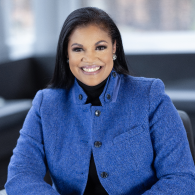
Lydia Logan leads IBM’s community and university skilling initiatives that create more inclusive and effective schools and workforces. Her programs help fulfill IBM’s pledge to skill 30 million people worldwide by 2030, and to skill two-million learners with AI expertise through 2026 — particularly those from historically under-resourced, under-served, and underrepresented communities.


For this role, she applies her decades of leadership and programmatic expertise in the realms of philanthropy, education, public policy, and economic development. These experiences inform Ms. Logan’s strategic development and execution of acclaimed global programs such as IBM SkillsBuild.


Ms. Logan also develops and manages strategic global partnerships with IBM’s clients, non-profit organizations, government, and content and curriculum developers that relate to education and career readiness. IBM’s investments in education and skills are part of the company’s efforts to mobilize technology and employee talent to address some of society’s biggest challenges worldwide, including environmental sustainability.


Prior to IBM, Ms. Logan led the Verizon Innovative Learning Schools initiative that provides technology and training to under-resourced public schools. She served as senior policy director at the Eli and Edythe Broad Foundation, where she drove education policy and philanthropic investments to improve the management, quality, and transparency of public schools. Ms. Logan also served as the VP of programs for the Kimsey Foundation, to improve educational outcomes at under-resourced public schools, and helped low-income families bridge the digital divide.


Ms. Logan holds a B.A. from the University of Pennsylvania.

Caitlin Mills

Assistant Professor
University of Minnesota
Caitlin Mills has a PhD in Cognitive Psychology, and her research focuses on constructs related to mind wandering and engagement during learning and in everyday life contexts. She aims to characterize when mind wandering occurs, how it influences learning, and ways to automatically detect it in real-time. Other research interests include the influence of mind wandering in ubiquitous tasks such as driving and how it relates to functional aspects of our lives such as affect, mental health, boredom, and creativity.

Managing Director and Head of the PolicyCenter

JPMorganChase

Carlos Monje Jr. is Head of JP Morgan Chase’s PolicyCenter, which develops and advances sustainable, evidence-based policy solutions to drive inclusive economic growth in the U.S. and around the world.


Monje most recently served as Under Secretary of Transportation Policy at the U.S. Department of Transportation. The third-highest-ranking official in the department, Monje supervised policy, research, innovative finance, international affairs and project delivery. He led the team that helped pass the Bipartisan Infrastructure Law (BIL), a $650 billion infusion into our nation’s infrastructure system. He formed and led the implementation team that has funded 45,000 projects around the country and was recognized by the Partnership for Public Service with a 2023 Service to America Award (colloquially known as the Sammies, or the Oscars of federal service).


Monje led process for the Biden-Harris presidential transition where he recruited, trained and deployed more than 400 volunteers to do a top-to-bottom review of the federal government amidst a pandemic and contested election.


Monje served as Twitter’s Director of Policy and Philanthropy for the US and Canada at a time of unprecedented scrutiny for the tech sector.


Monje was previously Special Assistant to the President and Chief of Staff of the White House Domestic Policy Council where he helped oversee all aspects of policy, message and event development across a wide spectrum of domestic policy issues. He also was a founding staffer of the White House Office of Social Innovation, where he oversaw efforts to pass and implement the Edward M. Kennedy Serve America Act and promoted cross-sector partnerships.

Managing Director

Leeds Illuminate

Laura Pinnie has built her career at the intersection of education, workforce development, and impact investing, with a focus on supporting companies and institutions that expand opportunity for learners and workers across the education-to-employment continuum. Laura is a Managing Director at Leeds Illuminate, a growth equity firm investing in education and workforce companies that improve outcomes from the first day of school to the last day of work. Previously, Laura was a Director at ZOMA Capital, where she led investments in education, workforce, and sustainability-focused companies. Earlier in her career, she worked in J.P. Morgan’s Impact Investing Group, deploying debt and equity capital across emerging markets and mission-driven sectors, and began her career as a Credit Analyst covering higher education, nonprofit institutions, and healthcare systems. Laura serves as a Trustee at Metropolitan State University of Denver, where she is Chair of the Finance Committee, and is deeply committed to building cross-sector partnerships that connect K–12, postsecondary, and workforce systems to better serve learners at every stage of life.

Vice President – Education Grantmaking

Ascendium

Carol Rava is the Vice President – Education Grantmaking for Ascendium, a national philanthropy supporting postsecondary and workforce programs that help low-income learners on their path to upward mobility. Prior to this role, Carol worked at the Postsecondary Commission, an accreditor for colleges that provide strong economic returns to their students. Carol helped found the tech non-profit Get Schooled, which offers free digital college and career counseling for low-income students. She was an executive with Seattle Public Schools, and spent eight years in a variety of leadership roles in advocacy, communications and education programs for the Gates Foundation. Carol has a Master’s in Education Policy from Stanford and a Bachelor’s in History and Religion from Harvard. She lives in Seattle.

Pavani Reddy

Senior Program Officer

Gates Foundation

As a senior program officer at the Gates Foundation, Pavani Reddy advances the responsible development of artificial intelligence in learning and wayfinding—helping ensure these systems are effective, transparent, and harm-aware.


For two decades before joining the foundation, Reddy worked at the intersection of product strategy, design, development, and data—leading product management and user experience in educational technology at EAB and legal technology at LexisNexis. Beyond her work at the Gates Foundation, she collaborates deeply with entrepreneurs (inspired by the belief that all entrepreneurship should be “social”) to help them help others flourish.


She is the author of Ethical Product Development (2020), a guide for innovators seeking to maximize social good while minimizing harm. She holds a B.A. in economics and development studies from Brown University (RI) as well as a J.D. and an MBA from the University of Virginia.

VP Technology Innovation

Axim Collaborative

Philipp Schmidt is CTO of Axim Collaborative, a non-profit organization founded by MIT and Harvard to address systemic equity gaps in higher-education. He is also a research scientist at MIT and advisor for digital credentials. Prior to joining Axim, Philipp was the Director of Digital Learning at the MIT Media Lab. He has extensive experience developing technology-enabled programs that increase opportunities for learning and education. Philipp founded Peer 2 Peer University (P2PU), a non-profit that provides wrap-around support for online courses through a network of public libraries, serves on the board of College Unbound, a college designed from the ground up to serve adult students, and was a founding board member of the OpenCourseWare Consortium. He co-authored the Cape Town Open Education Declaration and has developed a number of open standards for digital academic credentials including Mozilla Open Badges. He has received Shuttleworth and Ashoka fellowships, and came to MIT as a Media Lab Director’s fellow. Before moving to the US, he lived and worked in South Africa. He holds a CS degree from FH Furtwangen in Germany and an MBA from MIT.